Private jet charter rates Dallas to Houston
Private jet charter rates Dallas to Houston start at $2,500 for a turboprop. The 208 nautical mile route typically runs about an hour in the air. Figures here are estimates, so request a quote for your dates.
- 208 nm239 sm
- 1h 02mturboprop duration
- $2,500–$3,500one-way ballpark
- Main page
- Route list
- Dallas to Houston
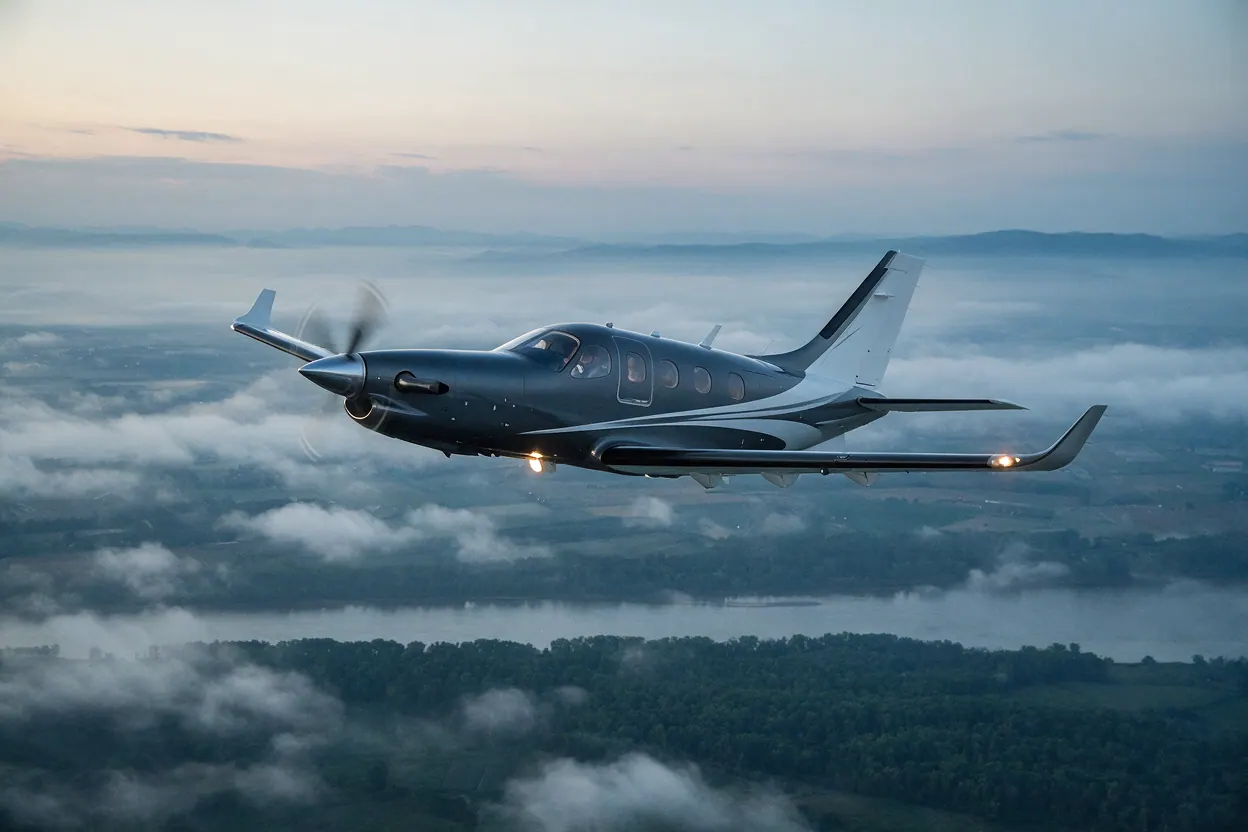
Dallas to Houston pricing by aircraft type
From Dallas to Houston by private jet is 208 nautical miles, 1h 02m on a turboprop, estimated at $2,500–$3,500 one way.The table below shows each class that flies this route nonstop, the block time it typically runs, and an estimated one-way price range. These are planning numbers for the 208 nautical mile hop, not a quote. Your final figure depends on the aircraft, the airport pair, how long you keep the plane, and how many legs you fly.
| Class | Duration | One-way est. | Remarks |
|---|---|---|---|
| Turboprop | 1h 02m | $2,500–$3,500 | Strongest option |
| Light jet | 0h 48m | $4,000–$6,000 | Nonstop |
| Midsize jet | 0h 48m | $5,200–$8,000 | Nonstop |
| Super-midsize jet | 0h 46m | $7,200–$10,000 | Nonstop |
| Heavy jet | 0h 46m | $9,500–$14,500 | Nonstop |
Per-aircraft estimates, not per-seat, quoted before federal excise tax and segment fees. Time covers taxi, climb and descent.
Airline tickets vs a charter, Dallas to Houston
Airline prices are the lowest Google Flights showed for one traveller on Dec 9, 2026 (checked Nov 15, 2026); the charter row is our estimate for the whole aircraft. For 8 travellers, first-class airfare tickets total about $1,576, versus $2,500–$3,500 for the entire turboprop.
| How you fly | Carrier | Dur | One-way est. | Each seat |
|---|---|---|---|---|
| Airline economy | United · nonstop | 1h 15m | $99 | $99 |
| First-class airfare | American · nonstop | 1h 16m | $197 | $197 |
| Turboprop | The full aircraft, 8 seats max | 1h 02m | $2,500–$3,500 | $310–$440 |
Airline ticket prices shift daily and don't cover bags past the fare allowance; the per-seat charter number assumes all seats are taken.
Why turboprop suits this route
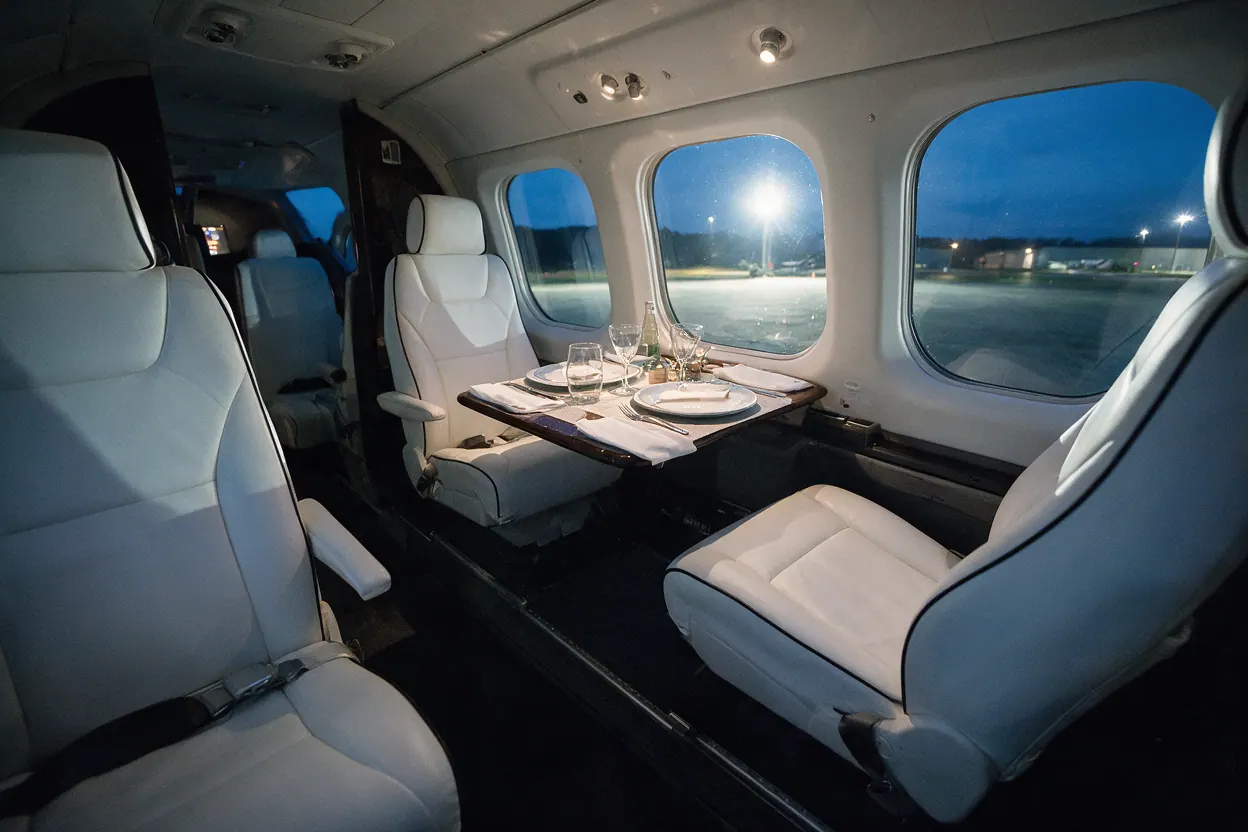
A turboprop suits this distance better than anything faster. On a 208 nautical mile hop, a light jet or midsize jet saves only a few minutes over a turboprop, and the turboprop estimate of $2,500 to $3,500 is well under the light jet band. Aircraft like the Pilatus PC-12 NGX and Daher TBM 960 cruise between 290 and 330 knots and still land the trip in about an hour.
Jets still make sense if you want more cabin and baggage room or if your group is larger than six. Light and midsize jets both estimate at 48 minutes of block time, and super-midsize and heavy jets at 46. You are paying for the cabin on this route, not the clock. A heavy jet estimate of $9,500 to $14,500 buys space and range you will not use on a Houston run.
Pilatus PC-12 NGX
- 6 pax
- 290 kt cruise
- 1,800 nm range
Cabin 4 ft 10 in tall, 16 ft 11 in long. Baggage 40 cu ft.
Daher TBM 960
- 6 pax
- 330 kt cruise
- 1,730 nm range
Cabin 4 ft tall, 13 ft 3 in long. Baggage 32 cu ft.

Leaving Dallas
Dallas Love Field has an 8,800 foot runway and sits close to downtown, which makes it the usual departure point for the Houston run. Addison Airport, with 7,203 feet of runway, is the north Dallas alternative and saves the drive for passengers coming from Plano or Frisco.
If your group is six or fewer, then a turboprop from either field keeps the trip short and the price down. Ask which home airport your quote assumes, because the two are opposite sides of the metroplex and the ground time differs a lot at rush hour.
Arriving in Houston
William P. Hobby Airport has a 7,602 foot runway, which is the shorter ride into the city. Sugar Land Regional, with 8,000 feet of runway, serves the southwest suburbs and the Energy Corridor side of town.
If your meeting is downtown or at the Texas Medical Center, then Hobby is the more practical drop. If it is in Sugar Land or along the Grand Parkway, then the suburban field saves you a long drive in from the east side. Neither arrival puts you through a commercial terminal.
| Field | ID | Rwy |
|---|---|---|
| William P. Hobby Airport | KHOU / HOU | 7,602 ft |
| Sugar Land Regional Airport | KSGR / SGR | 8,000 ft |
| Dallas Love Field | KDAL / DAL | 8,800 ft |
| Addison Airport | KADS / ADS | 7,203 ft |
When to book this route
Weekday mornings are the tightest window on this corridor, with demand building from about 7 to 9 a.m. as business travelers head to Houston for the day. If you need a departure inside that window, then lock the aircraft several days out rather than the night before, when the turboprops are most likely to be committed elsewhere.
Price pressure on this leg comes from round-trip bookings, not from the one-way mileage. If you fly down and back the same day, then expect to pay for both legs and any wait time in Houston, and ask how the operator counts that wait. Summer afternoons can also push departure times around, since afternoon storms are common along the I-45 corridor.
Routes near Dallas to Houston
These 6 private jet city pairs span 158 to 279 nautical miles, with one-way turboprop estimates running $2,200 to $4,500.
Questions about this route
What are typical private jet charter rates Dallas to Houston?
Estimates run from $2,500 to $3,500 for a turboprop and $4,000 to $6,000 for a light jet one way. Midsize jets estimate at $5,200 to $8,000, super-midsize at $7,200 to $10,000, and heavy jets at $9,500 to $14,500. These are planning ranges, not quotes. Final pricing depends on the specific aircraft, the airport pair, the date, and whether you keep the plane waiting.
How long is the flight from Dallas to Houston by private aircraft?
Block time runs about 1 hour 2 minutes in a turboprop and 46 to 48 minutes in a jet, nonstop either way. The distance is 208 nautical miles, or 239 statute miles. Door to door you also add the drive to Love Field or Addison and the ride in from Hobby or Sugar Land, both of which are short compared with the commercial terminals.
Which airports serve this route?
On the Dallas side, Dallas Love Field has an 8,800 foot runway and Addison Airport has 7,203 feet. In Houston, William P. Hobby has 7,602 feet and Sugar Land Regional has 8,000 feet. All four handle the aircraft types that fly this leg. Your choice mostly comes down to which side of each metro area you are starting from and finishing in.
Is a turboprop or a jet better for this short hop?
A turboprop is the better value on 208 nautical miles, because the jets save only a few minutes of block time while costing noticeably more. Turboprops estimate at $2,500 to $3,500, well under the light jet band of $4,000 to $6,000. Choose a jet when you need more cabin space, more baggage capacity, or seating beyond six passengers.
Can I fly Dallas to Houston and back in one day?
Yes. The flight is short enough that a same-day return works, but you pay for both legs and any time the aircraft waits in Houston. Ask how the operator bills that wait before you compare quotes. A turboprop with a quick turnaround on the ground usually keeps the total lower than a jet doing the same day trip.
What drives the price up on this route?
Waiting time in Houston, a larger cabin, and peak weekday morning departures are the main factors. The hourly rate covers the flying, but the total also includes landing and handling fees at both ends, plus any crew overnight if the schedule runs long. Compare broker quotes line by line, since the same trip can be packaged differently.